 Neuroclimate
Climate Change & Mental Health
Climate change affects mental health both through direct experiences, like living through a flood or heat wave, and through the ongoing awareness of a threatened future.
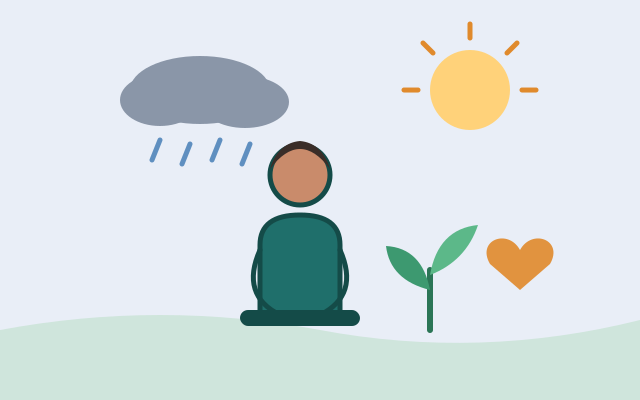
Understanding climate emotions
Climate anxiety describes worry, fear, sadness, or uncertainty regarding climate change and its consequences. It stems from concerns about rising global temperatures, extreme weather, ecosystem damage, and the planet’s long-term viability. This condition does not automatically constitute a mental health disorder. Concern for climate change represents a rational response to a severe environmental crisis, though these emotions can become overwhelming for some.
Manifestations of climate anxiety include persistent worry about future environmental conditions, distress triggered by reports of climate disasters, and uncertainty about future societal states. Others experience frustration or sadness when perceiving insufficient action on climate change. These feelings intensify when individuals care deeply about the environment but feel powerless to effect meaningful change through individual actions.
Young people face unique vulnerabilities because climate change threatens their future education, careers, communities, and quality of life. A study by Hickman et al. (2021), surveying 10,000 young people across ten countries, revealed widespread worry, with many reporting negative impacts on daily life. These findings underscore the necessity of taking young people’s concerns seriously and providing opportunities for them to discuss their feelings and engage in climate solutions.
Managing climate-related stress involves several strategies. Consulting reliable sources helps individuals understand the issue without succumbing to alarming or misleading information. Conversations with friends, family, teachers, or mental health professionals offer crucial emotional support. Participation in community cleanups, environmental education, or sustainability projects fosters connection and highlights the efficacy of collective action.
Individuals should not bear the sole responsibility for solving climate change. Governments, organizations, businesses, and communities share this duty. Recognizing shared responsibility mitigates feelings of isolation and helplessness.
Addressing climate change demands simultaneous attention to environmental protection and mental well-being. By acknowledging climate-related emotions, strengthening community support, and engaging in meaningful collective action, people can build resilience while advancing toward a healthier, sustainable future.
Direct mental health impacts
- After disasters: higher rates of post-traumatic stress, depression, anxiety and substance use, which can persist for years.
- Heat: hot weather is linked to more mental-health-related emergency visits, more aggression, and higher suicide rates.
- Displacement and loss: losing a home, livelihood or community disrupts identity and social support.
- Existing conditions: people living with mental illness may face greater risks during heat and disasters.
Is climate anxiety a disorder? Not in itself. Concern about climate change is a reasonable response. It deserves attention when it causes ongoing distress, interferes with sleep, work, study or relationships, or leads to hopelessness. In those cases, talking with a mental health professional can help.
Coping and building resilience
Inner resources
- Acknowledge and name your feelings
- Practise grounding: slow breathing, noticing your senses
- Set healthy boundaries with news and social media
- Spend time in nature and notice what is still thriving
Connection and action
- Share feelings with friends, family or a climate-aware group
- Choose actions aligned with your values and skills
- Join collective efforts: community, school or workplace
- Celebrate progress and rest when needed
Need help now? If you are in crisis or thinking about harming yourself, contact your local emergency number or a crisis line in your country right away.
Sources & further reading
- Hickman, C., Marks, E., Pihkala, P., Clayton, S., Lewandowski, R. E., Mayall, E. E., Wray, B., Mellor, C., & van Susteren, L. (2021). Climate anxiety in children and young people and their beliefs about government responses to climate change: A global survey. The Lancet Planetary Health, 5(12), e863–e873. https://doi.org/10.1016/S2542-5196(21)00278-3
- Intergovernmental Panel on Climate Change. (2022). Climate change 2022: Impacts, adaptation and vulnerability. https://www.ipcc.ch/report/ar6/wg2/
- World Health Organization. (2022, June 3). Why mental health is a priority for action on climate change. https://www.who.int/news/item/03-06-2022-why-mental-health-is-a-priority-for-action-on-climate-change
- Canadian Psychological Association. (n.d.). Psychology works fact sheet: Climate change and anxiety. https://cpa.ca/psychology-works-fact-sheet-climate-change-and-anxiety/
- World Health Organization (2022). Mental health and climate change: policy brief. who.int
- Albrecht, G., et al. (2007). Solastalgia: the distress caused by environmental change. Australasian Psychiatry.