 Neuroclimate
Climate Change & Health Equity
Climate change is a “threat multiplier.” It deepens existing inequalities, so the people who have contributed least to the problem often face the greatest harms and have the fewest resources to cope.
What Is Health Equity?
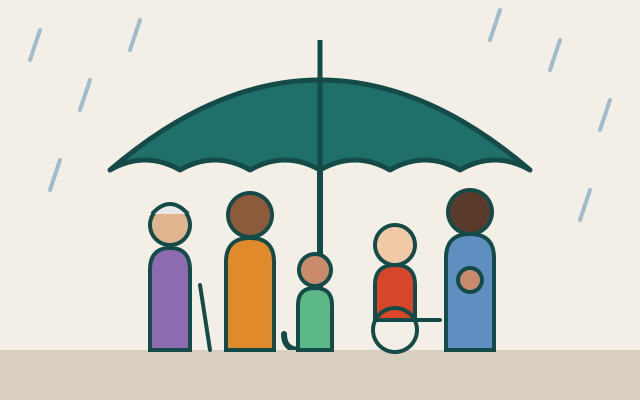
Health equity ensures that all individuals possess a fair opportunity to attain optimal health, independent of income, geography, or social standing. This framework acknowledges the unequal distribution of resources and opportunities necessary for disease prevention. Consequently, certain populations require targeted interventions to dismantle barriers such as housing insecurity, restricted access to medical care, or environmental hazards. The World Health Organization (WHO) defines health equity as the elimination of avoidable and unjust health disparities among different population groups (WHO, n.d.).
This concept does not mandate uniform resource allocation. Rather, it demands the provision of support tailored to specific needs, thereby leveling the playing field for health outcomes. Consider a community facing extreme heat: equitable intervention involves deploying shaded public spaces, cooling centers, and clean water supplies. Distributing these resources to those most vulnerable constitutes a practical application of health equity.
Why Doesn’t Climate Change Affect Everyone Equally?
Climate change does not impact all populations uniformly. Disparities in environmental exposure, living conditions, and adaptive capacity dictate who bears the brunt of rising temperatures, wildfires, flooding, and deteriorating air quality. The Intergovernmental Panel on Climate Change (IPCC, 2022) identifies social and economic disadvantage as a primary driver of this disproportionate burden.
Social determinants of health—including income, housing stability, education, employment status, and healthcare access—mediate these outcomes. Urban neighborhoods lacking tree cover and green space suffer from intensified heat islands due to absent shading. Residents in flood-prone areas or those with poor indoor air quality face heightened health risks, particularly when financial constraints prevent relocation or home improvement.
Geographic location further modulates risk. Communities situated in zones susceptible to flooding, wildfires, or extreme heat endure greater hazard exposure. Compounding this physical vulnerability is often a lack of infrastructure; limited availability of healthcare facilities, emergency services, and transportation options impedes timely assistance during extreme weather events.
These variations reveal that climate change functions simultaneously as an environmental and a health equity challenge. Mitigation efforts must extend beyond reducing environmental hazards to dismantling the socioeconomic barriers that render specific populations more vulnerable than others.
Sources & further reading
- Intergovernmental Panel on Climate Change. (2022). Climate change 2022: Impacts, adaptation and vulnerability. https://www.ipcc.ch/report/ar6/wg2/
- World Health Organization. Climate change and health: vulnerability and equity. who.int
- The Lancet Countdown on Health and Climate Change. lancetcountdown.org
- World Health Organization. (n.d.). Social determinants of health. https://www.who.int/health-topics/social-determinants-of-health
- World Health Organization. (2023, October 12). Climate change and health. https://www.who.int/news-room/fact-sheets/detail/climate-change-and-health
- World Health Organization. (2022, November 2). Review of IPCC evidence 2022: Climate change, health, and well-being. https://www.who.int/publications/m/item/review-of-ipcc-evidence-2022--climate-change--health--and-well-being